My Honest Review of the Whole30
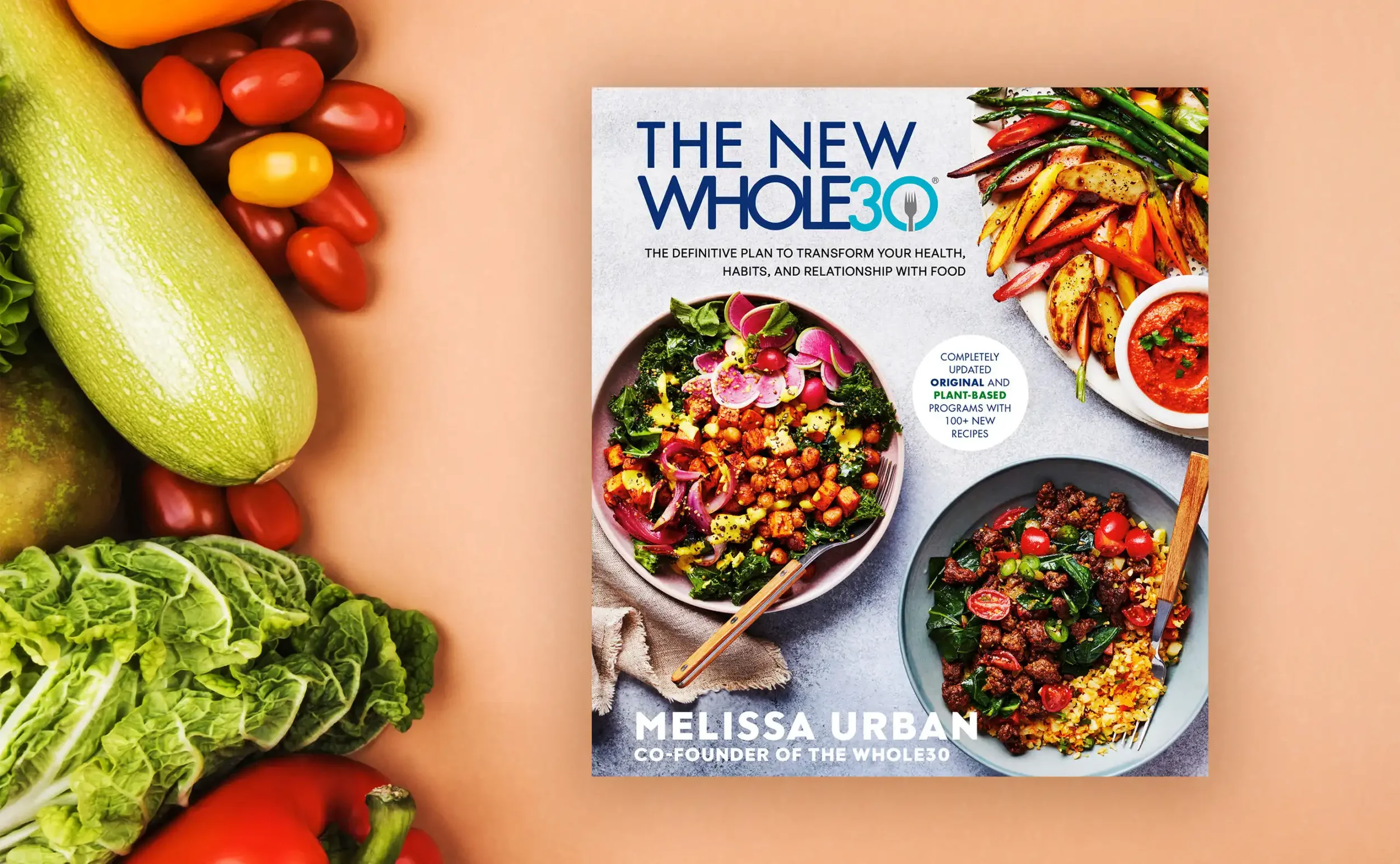
I’ll be the first to admit that it takes a certain kind of commitment (or stubbornness) to do the Whole30... let alone do the Whole30 three times. And yet, this January, I found myself back at it once again.
What is the Whole30? 🥑
If you’re unfamiliar, the Whole30 is a 30-day elimination program that centers on eating whole, unprocessed foods while removing sugar, alcohol, grains, legumes, dairy, and other processed additives. The purpose isn’t so much dieting or weight loss as it is creating awareness - learning how certain foods impact your own energy, digestion, cravings, and overall health.
🔍 The Whole30 program has two phases:
Phase 1: 30 Days of Elimination
Phase 2: 10 (or more) Days of Reintroduction
✅ The Rules
During elimination, meals can include meat, seafood, and eggs; lots of vegetables and fruit; natural, healthy fats; and fresh herbs, spices, and seasonings. You don’t have to count or restrict calories, track your food, or limit your portions.
To accurately identify specific food sensitivities, you will commit to the complete elimination of these groups for 30 straight days:
Added Sugar (Real or Artificial)
Alcohol (Wine, Beer, Cider, Liquor, etc.)
Grains (Wheat, Oats, Rice, Corn, Quinoa, etc.)
Legumes (Beans, Lentils, Soy, and Peanuts)
Dairy (Milk, Cheese, Yogurt, etc.)
Baked Goods, Pasta, Cereal, Chips, and Fries (a.k.a. “The Pancake Rule”) - Designed to remove the temptation to recreate comfort foods or “treats,” even when they’re made with Whole30-approved ingredients. The goal is to break the cycle of relying on foods with no brakes and instead build habits that help tame cravings, manage stress, and confidently choose foods that actually make you feel good, both during the program and after it ends.
Weighing Yourself - No stepping on the scale, taking measurements, or analyzing body fat. The Whole30 isn’t a weight-loss diet, it’s a program designed to help you identify food sensitivities, build healthier habits, and develop a more balanced, sustainable relationship with food. Instead of focusing on numbers, the emphasis is on non-scale victories like improved sleep, energy, digestion, mood, and reduced cravings - things that can’t be accurately measured by a scale but matter far more in the long run.
🤝 Reintroduction
Immediately after the elimination phase ends (day 31), you begin reintroducing food groups one at a time. Each food group is added back individually, with 2-3 days of returning to elimination-style eating in between. This spacing is intentional - it gives your body time to respond so you can actually notice what’s happening.
During reintroduction, the focus shifts to awareness. You pay close attention to how each food group affects your energy, mood, sleep, digestion, bloating, cravings, and overall well-being.
This is where the real insights happen. Reintroduction reveals the foods that were quietly working against you, and just as importantly, confirms which foods actually support your body. By comparing how you felt during elimination to how you feel once foods are added back in, you start to see patterns clearly.
This is the true Whole30 magic. Reintroduction lays the groundwork for a personalized, sustainable approach to eating - one rooted in understanding, not restriction - and becomes the foundation for your long-term Food Freedom.
So Why Whole30… Again? 🤔
Why do the Whole30 once, let alone three times you ask? Fair question. I’ll be the first to admit that this is a big, bold, slightly life-altering commitment that requires serious preparation, planning, and support.
The first time I did Whole30 was back in 2016. I actually completed the 30 days flawlessly. Where I didn’t do so well was the reintroduction phase (which might just be the most important part of the entire program). That’s the phase where you finally learn how the foods you eliminated affect your body when you add them back in. Unfortunately, I was a little too eager to get pizza back in my life and, in the process, completely sabotaged that learning opportunity.
The second time around was a year or two later, and while I don’t remember all the details, I do remember this: I didn’t finish.
So… why do it again?
Partly because I wanted to finally do Whole30 from start to finish, reintroduction phase included, and do it as intentionally as possible. But more honestly? I was craving a reset - badly. My energy was low, my weight was higher than I felt comfortable with, my skin was irritated, and my mood was… not great.
It felt like time for a change. And as you and I both know, what we eat plays a huge role in how we feel physically and emotionally. So here we are.
Preparing 🗓️
So why not dive in at the start of a brand-new year? January is kind of the time to do a Whole30. New year, new me… or at least new habits, right?
By the end of December, I was fully in it buying the books, downloading recipes, building out grocery lists, and gently (or not-so-gently) convincing my husband that he wanted to do it too.
One truly amazing thing about Whole30 is how popular it is. That popularity means there’s no shortage of support: endless recipes, compatible packaged foods, podcasts, Facebook groups, Pinterest boards, and even meal services that can make the 30 days feel much more manageable, if you have the time, energy, and resources to commit.
And I want to be honest about my own situation. I don’t have kids, I work from home, and I have a supportive partner who actually enjoys cooking. That made the decision to do Whole30 (and to do it well) easier for me than it might be for a lot of people.
That said, I genuinely believe that anyone can do hard things when they really want to. Where there’s a will, there truly is a way, and the Whole30 community is incredibly supportive. There is no shortage of people sharing tips, tricks, encouragement, and recipes to help you through it.
But babe, please hear me when I say this: you cannot wing the Whole30. You need to spend real time preparing and planning how you’re going to be successful hour by hour, day by day, week by week. It’s a lot.
And you know what? It’s also worth it.
Planning ✍️
Once you’ve committed to the prep, the next (and arguably most important) piece is planning. This is where the Whole30 really starts to feel doable, or not.
Planning your daily meals and snacks takes time. Full stop. Truthfully, I’ve always been pretty consistent about meal planning even outside of Whole30, using the Notes app on my phone to outline meals week by week. That said, it still requires a dedicated effort every single week, usually on Sundays, or whatever day works best for you.
My process is simple and repeatable. I start by flipping through The New Whole30 Book or hopping on Pinterest to find Whole30-compatible recipes (you can check out my saved Whole30 Recipes board here). I always plan dinners first, since those tend to be the most time-consuming and easiest to derail. From there, I choose two to three breakfast options I can rotate through, and then I think through snacks that work with both the program and my actual schedule for the week.
As I go, I build my grocery list directly underneath my meal plan so nothing slips through the cracks. There are absolutely apps out there that can streamline this even more - but what can I say? I like to keep it simple.
⭐️ Pro Tips
Always have at least one quick and easy breakfast, lunch, and dinner option for the days you just need things to be effortless.
Whole30 offers a ton of helpful resources, including a list of approved brands and restaurants. Use them.
If cooking isn’t your thing, consider a Whole30-compatible meal delivery service - there’s no shame in outsourcing.
Do not forget snacks. Seriously. Having Whole30-approved snacks on hand can be the difference between staying on track and saying “screw it.” Some of my favorites include: Chomps Meat Sticks, Fruit, Nuts, RX Bars and these Cashew Date Balls.
And finally: don’t overthink it. I promise each week gets easier as you learn what works best for you.
The Whole30 Timeline ⏳
(& My Experience)
Days 1–7: Adaptation
Excited! Energized! Confident! SO ready to take on the challenge I’d been planning for weeks. For many people, this first phase feels relatively easy thanks to the novelty of it all. When everything is new, motivation tends to be high. That said, if your pre-Whole30 diet was heavy in processed foods, sugar, alcohol, and refined carbs, this week can feel like a bit of a… slap in the face. Thankfully, my diet was in a pretty good place going in, so I found the first week to be more smooth than rugged. I definitely missed creamer in my coffee, electrolyte packets in my water, and yogurt as my go-to breakfast, but overall, the transition felt manageable. Building new habits and adjusting your diet isn’t easy, but every completed day builds momentum and confidence for the next.
Days 8–14: Adoption
This phase includes what are often considered the hardest days of the program (hello, days 10 and 11), but surprisingly, I found this stretch to be the easiest. I was in a rhythm, excited about my recipes, already noticing benefits, and fully committed to the process. That said, this is the point where many people quit (including my husband) so I recognize that what felt easy for me may have been incredibly challenging for others. I made a conscious effort to focus on the positives: how I was feeling, the changes I was seeing, and the opportunity to get creative with my meals. That mindset made all the difference.
Days 15–21: “Smooth Sailing”
Melissa Urban’s words, not mine - but I get it. By this point, things really did start to smooth out. I had a solid routine, was planning and prepping effectively, and had a reliable rotation of recipes I genuinely enjoyed. I even found a nearby Whole30-compatible restaurant, which was a lifesaver on nights when cooking just wasn’t gonna happen. That said, my cravings did shift. I found myself wanting to go out to eat with friends, have a drink during the football playoffs, or add just a touch of sweetness to my morning coffee. So while I wouldn’t call it perfectly smooth sailing, it was doable.
Days 23–30: The Home Stretch
Ironically, this ended up being the most challenging phase for me. I was comfortable with my eating habits, confident in my go-to meals and snacks, and very good at saying no to non-compatible foods - but I was also a little fried and craving more flexibility. I really missed rice (because there are only so many potatoes a girl can eat). Luckily, this is when you start looking ahead to reintroduction, and knowing that flexibility was on the horizon kept me motivated. Planning what came next gave me the final push I needed to finish strong.
Days 31–40+: Reintroduction
I made it! And on Day 31, I wasted absolutely no time reuniting with a very large, very glorious bowl of rice. This phase was equal parts exciting and wildly informative as I slowly started bringing foods back onto my plate after 30 days without them. Reintroduction is really where the Whole30 magic happens because this is where you gather data, make connections, and figure out what actually works for your body.
Everyone approaches this phase a little differently, but here’s exactly how my reintroduction played out:
Day 31 – Reintroduce Non-Gluten Grains
Gluten-free oatmeal at breakfast, quinoa at lunch, and rice (hallelujah) at dinner. This was the food group I was most eager (and slightly anxious) to bring back, which is exactly why I tackled it first. I went into this one feeling fairly confident, and it ended up confirming what I already suspected: non-gluten grains work really well for me. Could I overdo it and feel less than amazing? Absolutely. But a reasonable serving at each meal caused zero issues and felt completely sustainable - which was honestly the best possible outcome.
Days 32–33 – Back to Whole30 Elimination
A quick reset to baseline before introducing the next food group.
Day 34 – Reintroduce Dairy
Yogurt at breakfast, milk in my coffee, and cheese on my salad. To be honest, dairy wasn’t something I missed much during elimination, but since I’d gone through phases of eating yogurt parfaits almost every morning in the past, I was curious what (if anything) I’d notice now. The verdict: small amounts are fine, but too much dairy leaves me feeling bloated, gassy, and tired - and honestly, that’s just not a trade-off I’m willing to make for extra cheese.
Days 35–36 – Back to Whole30 Elimination
Another quick reset to baseline before introducing the next food group.
Day 37 – Reintroduce Gluten Grains
Bread at breakfast, a tortilla wrap at lunch, and pasta for dinner. I didn’t struggle much without gluten during elimination, but I knew this reintroduction would be a big one. Gluten is sneaky - it shows up everywhere (especially in processed foods) - and let’s be real, I genuinely love bread. The good news: small amounts of gluten work just fine for me. The not-so-good news: it’s very easy to overdo it when pizza exists in the world. When I push it too far, my gut lets me know… loudly. This is definitely a food group I’ll pause and think about before diving in, but I’m grateful to know it’s not an all-or-nothing situation for me.
Days 38–39 – Back to Whole30 Elimination
Another quick reset to get back to baseline before introducing the next food group.
Day 40 – Reintroduce Legumes
Peanut butter at breakfast, hummus at lunch, and black beans at dinner. This was another food group I didn’t miss all that much, but I was still curious to see how my body would respond. Since typical serving sizes for legumes are relatively small, I figured this would be one I could handle just fine as long as I kept things reasonable - though let’s be honest, “reasonable” can be a stretch when there’s peanut butter in the house. The verdict? No real issues here. Too many beans will make their presence known (for everyone’s sake), but I tend to go light anyway. Peanut butter was nice to welcome back, though I genuinely enjoyed almond butter as a substitution during my elimination. Hummus, on the other hand, was something I truly missed, and I was thrilled to bring it back without any negative side effects. Legumes don’t make up a huge portion of my day-to-day diet before the Whole30, but it’s reassuring to know they work well for me when I do choose to include them.
Days 41–42 – Back to Whole30 Elimination
One last quick reset to baseline before introducing the next food group.
Day 43 & Beyond – Reintroduce Sugar & Alcohol (Optional)
A little honey in my matcha, electrolytes in my water, and a drink or two on the weekends. I didn’t feel the need for a super formal reintroduction here, mostly because I already knew how I wanted to move forward with these foods. Sugar and alcohol are, for me, the biggest culprits behind feeling groggy, inflamed, and generally cranky - data I’ve collected many times over. That said, sometimes it is worth it, and I’m okay with that. Choosing to enjoy these things in moderation, fully aware of how they’ll likely impact me, feels very different than mindlessly consuming them and wondering why I feel off. That’s really what the reintroduction phase is all about: understanding how foods affect you and then consciously deciding when they’re worth including, and when they’re not.

Key Takeaways 🔑
Overall, I’m really glad I decided to do Whole30 this year and I’m proud of myself for sticking with it, even when it got hard… or just plain boring. While Whole30 might be considered a “simpler” program compared to some diets (if we even want to call it a diet), I still found it genuinely challenging to commit to 30 days plus the reintroduction phase that followed.
It changes how you live in very real ways. Some of those changes were incredibly positive, and some were… less than glamorous. Whole30 isn’t just about what you eat - it impacts how you socialize, plan your days, and show up for yourself.
So with that in mind, here are my honest - both glamorous and not-so-glamorous - takeaways from this Whole30 round:
Non-Scale Victories (NSVs)
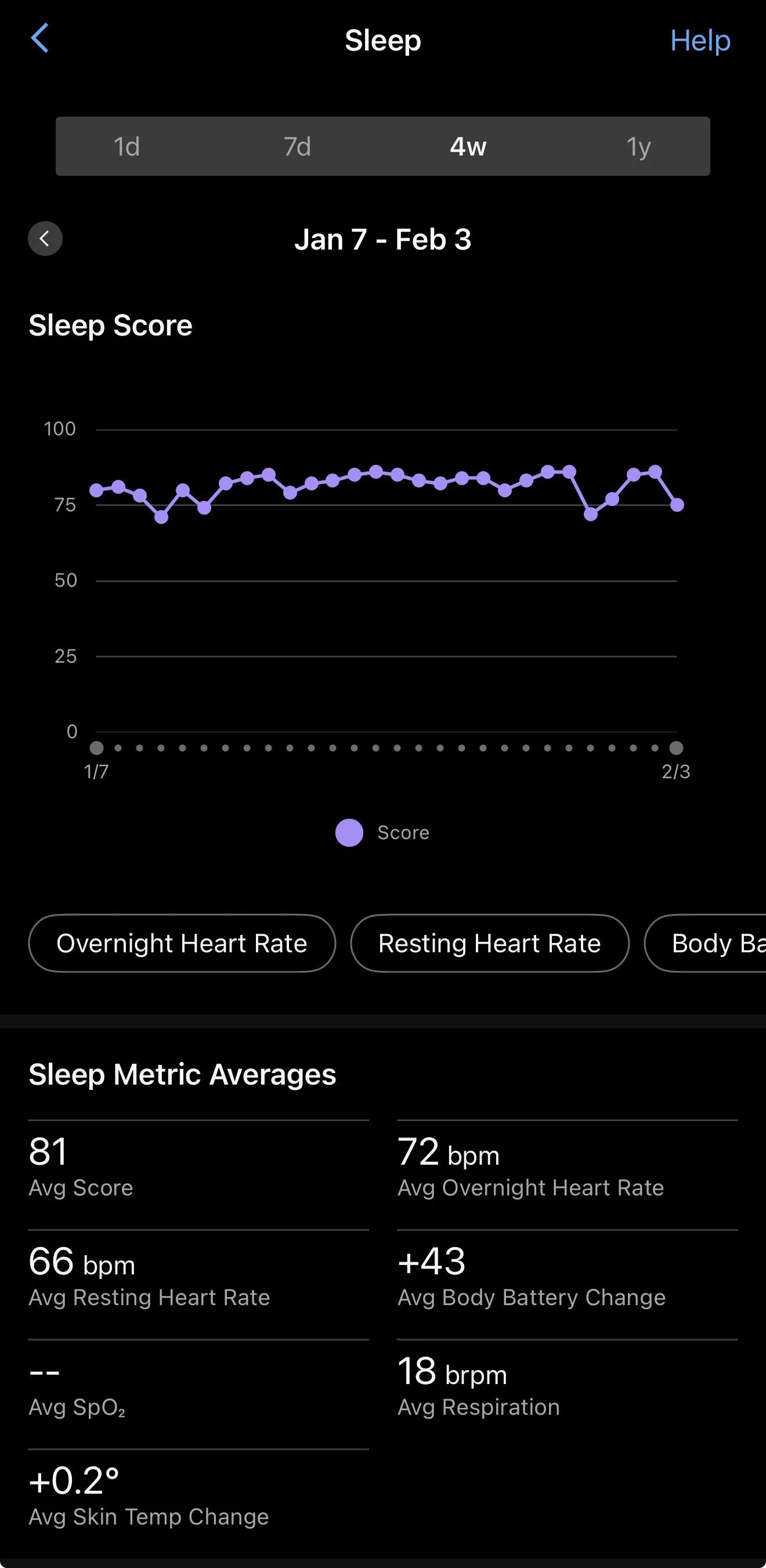
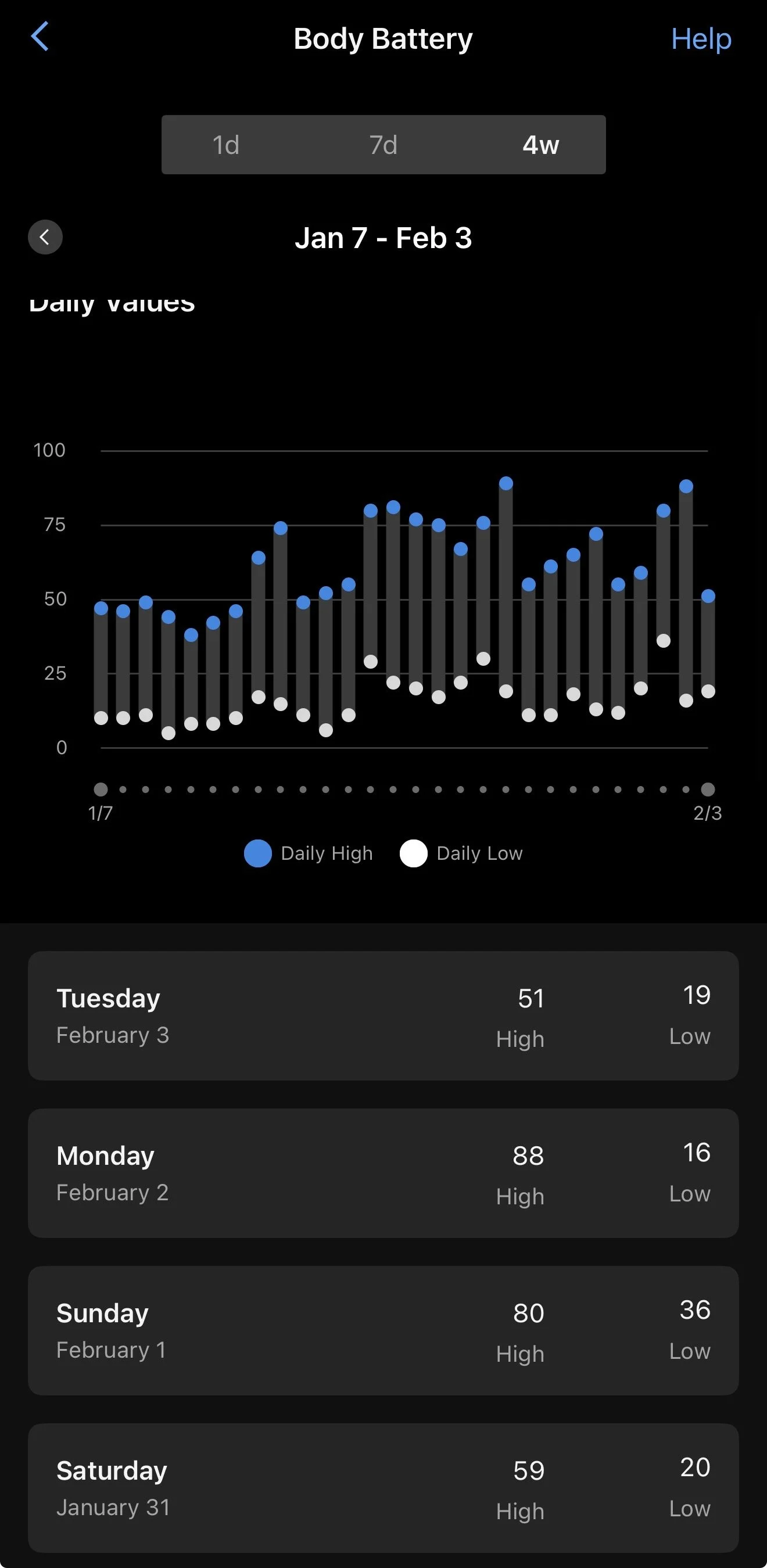
One of the core rules of Whole30 is staying off the scale for all 30 days, which forces you to pay attention to changes that actually matter - both physically and mentally. And honestly? This ended up being one of the most impactful parts of the experience for me. My non-scale victories showed up in ways that felt meaningful and sustainable: deeper, more consistent sleep and recovery; steadier energy and focus throughout the day; stronger, more enjoyable workouts; clearer, more radiant skin; and a noticeably better overall mood. Oh and yes, my clothes definitely fit better.
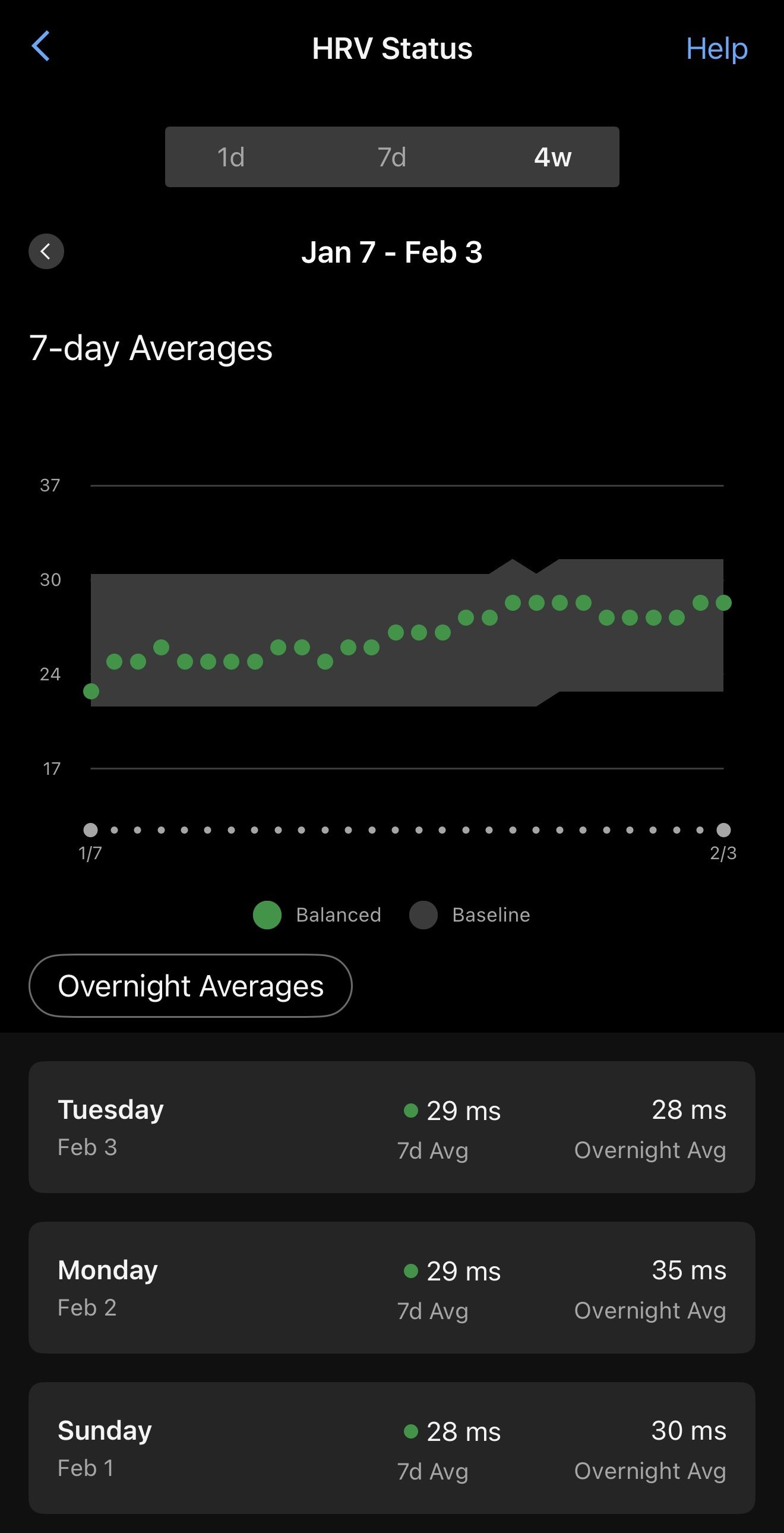
Because I wear a Garmin watch daily, I also had the rare opportunity to see these changes reflected in real-time data. My sleep score, body battery, and HRV all showed measurable improvements (screenshots below), which felt incredibly validating. It wasn’t just “in my head” - the numbers backed up how good I was feeling in my body. And for anyone wondering… yes, I did lose a few pounds. It just wasn’t the point. The real win was learning to measure progress by how I felt, not just what the scale said, and that mindset shift alone made the Whole30 worth it.
Food Freedom
The ultimate goal of Whole30 isn’t perfection or long-term restriction - it’s Food Freedom. Coined by the Whole30 team, Food Freedom means feeling empowered to choose foods that truly support your body, while trusting yourself to make those choices day after day. It’s the final stop on the Whole30 journey, where the insights you gain from elimination and reintroduction become a way of eating that’s joyful, flexible, and sustainable.
Food Freedom looks different for everyone because it’s shaped by your body, your goals, and your lifestyle. For me, it means eating mostly paleo - lots of fruits, vegetables, quality protein, and non-gluten grains - while limiting the foods I know don’t serve me well (excess dairy, gluten, sugar, and alcohol). At the same time, it leaves room for the small joys that make life feel full: a little sweetener in my morning coffee, electrolytes in my water bottle, the post-hike burger and fries, and a drink (or two) during playoff season.
This version of Food Freedom allows me to hold onto the health benefits I experienced during Whole30 without feeling deprived or rigid. It’s flexible, not all-or-nothing. Supportive, not restrictive. And most importantly, it’s a way of eating that works with my body, my preferences, my lifestyle, and my goals - not against them.
Cost $$
One thing I kept top of mind throughout this Whole30 - both mentally and in my budgeting spreadsheet - was cost. I wanted to understand how doing Whole30 compared to how I was eating before, when roughly 25% of my meals were eaten outside the home. I won’t sugarcoat it: getting started was a little rough on my wallet. Having done Whole30 before, I knew it was important to stock up early on compliant staples - things like salad dressings, coconut aminos, ghee, coconut milk, and plenty of Whole30-approved snacks. That initial grocery haul adds up quickly. I do a monthly grocery order through Thrive Market, which helps offset some of the cost by offering better prices on a lot of these staples. (I’m a big fan of Thrive Market because they’re a B Corp and every paid membership sponsors a free membership for a family in need. If you’re curious about trying it, you can get 40% off your first order with this link.) Even so, there’s no denying that the upfront investment required to do Whole30 well isn’t accessible for everyone.
All that said, when I zoomed out and looked at our total monthly food and beverage spend, it actually averaged out to be about the same as before when we were cooking at home and eating out a couple of times per week. (Roughly $1,000 per month, or about $250 per week.) I want to be very clear that I recognize the privilege in being able to buy the groceries I want and need without too much stress. Could you do Whole30 on a tighter budget? I think yes - with planning, shopping sales, cooking at home, and getting comfy eating a lot of potatoes. Where there’s a will, there’s a way. But I also want to be honest: this program does require dedicating a meaningful amount of money to the process.
A Few Other Thoughts…
The “New” Whole30 vs. The OG Whole30 - When the Whole30 first hit the scene back in 2009, not only was the science different, but the vibe was different too. The OG Whole30 leaned heavily into strict rules and a whole lot of “tough love.” It felt tailor-made for athletes, bodybuilders, CrossFitters, and people who genuinely enjoy being told to “just be more disciplined.” Perfection was the expectation and let’s be honest, that’s not realistic (or sustainable) for most people.
Enter the “New” Whole30. Today’s program feels far more inclusive and approachable, welcoming people of all backgrounds, lifestyles, and starting points - which, in my opinion, was a very smart evolution. In The New Whole30, the tone is noticeably more thoughtful and encouraging, with an emphasis on curiosity over shame and a genuine celebration of the incredibly diverse Whole30 community. You’ll also find updates to some outdated elimination rules, along with science-backed explanations about why coconut aminos finally get a pass despite the “no added sugar” rule. Overall, I’m a big fan of the changes Melissa Urban and the Whole30 team have made. It’s a great reminder that growth matters and that learning, adapting, and evolving when we know better is always a win.
Plant Based Whole30 - Another newer (and very welcome) addition to the Whole30 universe is the structured Plant-Based Whole30, designed specifically for those who are vegan or vegetarian. While I’m neither, I genuinely love that this option exists - it opens the door for an entirely new group of people to experience the program without compromising their values.
The rules are understandably different from a traditional Whole30 that includes meat. During the elimination phase, meals can include beans, lentils, and peas; whole or minimally processed soy (edamame, miso, natto, tofu, and tempeh); lots of vegetables and fruit; plant-based healthy fats; and plenty of fresh herbs, spices, and seasonings. The same food groups are eliminated, with the notable exception of minimally processed soy. There are plenty of testimonials that validate the Plant-Based Whole30 experience, which is reassuring if you’re considering it. So if you’re vegan or vegetarian and have been curious about Whole30, know that you absolutely can participate and that there are solid resources and a supportive community to help you along the way.
So… what do I really think about Whole30?
Honestly, I think it can be a powerful way to reset your habits, shift your relationship with food, and uncover your own version of Food Freedom - if you’re able to commit fully to the program from start to finish. For me, the time, energy, and cost were worth it. I walked away with clarity around what actually works for my body and a much stronger sense of trust in my own choices.
That said, would I do it again? Probably not. Now that I’ve completed the program front to back, I don’t feel the need to return to elimination-style eating unless something in my life changes significantly - my body, my lifestyle, or my goals. I think the magic of Whole30 is in the learning, not the repetition. When it’s used over and over as a diet or a tool for weight loss, it starts to miss the point.
At the end of the day, you do you, babe. I’ll never judge anyone for what they eat. Just know this: your weight is not a measure of your worth, and there is so much freedom in finally letting that belief go.